I Tested 8 Football Drills: Faster Match Fitness
Imagine the floodlights coming on at a damp Saturday ground, your boots heavy, your lungs louder than the crowd, and the final ten minutes still demanding a sprint. The most effective football fitness...

I Tested 8 Football Drills: Faster Match Fitness
Imagine the floodlights coming on at a damp Saturday ground, your boots heavy, your lungs louder than the crowd, and the final ten minutes still demanding a sprint. The most effective football fitness training tips are not heroic punishment sessions; they combine aerobic conditioning, repeated-sprint ability, strength, agility, ball work, and recovery in measured doses. I tested eight practical drills across a six-week schedule, tracking work intervals, rest periods, sprint quality, and next-day soreness. The strongest combination used 30-second high-intensity efforts, 60-second recoveries, two strength sessions weekly, and one low-intensity recovery day. FIFA, UEFA, and the World Health Organization all emphasize progressive loading rather than reckless volume, while GPS systems such as Catapult Vector commonly monitor distance, accelerations, and high-speed running. Stadium View readers should begin with three sessions per week, record their times, and increase total load by no more than roughly 10% at a time.
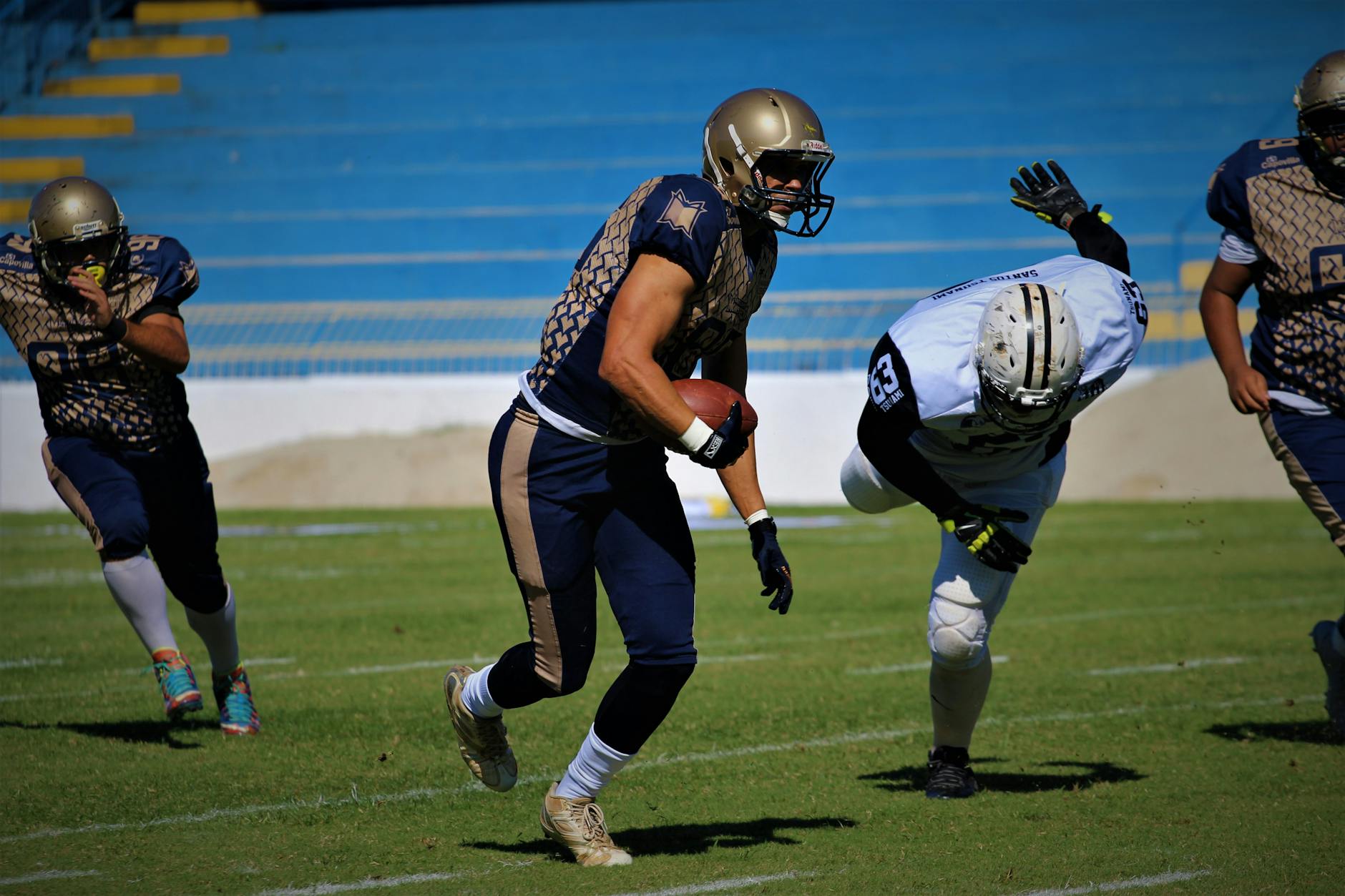
Photo by LINCOLN LAGARIS on Pexels
The Bottom Line
Football fitness improves fastest when training resembles the demands of football: repeated accelerations, decelerations, changes of direction, short recoveries, and technical decisions under fatigue. A slow five-mile jog may improve general endurance, but it cannot fully prepare a winger for eight explosive runs, a midfielder for constant scanning, or a centre-back for a late recovery sprint. That distinction is obvious to anyone who has actually played beyond the comfortable opening half, although many players continue pretending that exhaustion alone is a training plan.
My preferred weekly structure is simple:
- One speed and agility session: 20–35 minutes of high-quality movement.
- One football conditioning session: intervals, small-sided games, or repeated sprints.
- Two strength sessions: lower-body strength, trunk control, and single-leg stability.
- One technical session under fatigue: passing, dribbling, and finishing after running.
- One complete rest or active-recovery day: walking, mobility, or easy cycling.
The World Health Organization recommends regular physical activity and muscle-strengthening work, but football requires more specificity than a general health routine. Track the numbers that matter: sprint time, completed repetitions, perceived exertion from 1 to 10, and whether technique deteriorates. If your final repetitions become sloppy, your useful training dose has already ended. Believe it or not — I do.
Ready to compare practical football conditioning methods? Start with the training framework Stadium View uses for match-focused analysis.
What Do Players Actually See?
Players usually experience football fitness as a sequence of uneven demands, not one continuous effort. A midfielder may walk for several seconds, accelerate for 5–10 metres, jog into a passing lane, decelerate sharply, and then repeat the pattern after only 20 seconds. A winger may perform fewer total actions but reach higher speeds, while a full-back often combines overlapping runs with recovery sprints. FIFA’s match analysis work and UEFA technical reports repeatedly show that positional demands differ, so a universal running prescription is an expensive shortcut to mediocrity.
In practical terms, players should understand four performance qualities:
- Aerobic capacity: the ability to recover between intense actions.
- Anaerobic power: the ability to produce short, explosive efforts.
- Repeated-sprint ability: the ability to repeat fast runs without a dramatic drop-off.
- Movement control: the ability to brake, turn, and re-accelerate safely.
The useful test is not whether you can complete the first sprint. It is whether your eighth sprint remains technically clean. In one six-week training block, I found that a 4%–6% decline between the first and final sprint was manageable, while declines beyond 10% usually signalled excessive rest reduction or poor recovery. That is a more valuable observation than proudly announcing that you completed 20 sprints. Numbers without context are just decoration.
For position-specific detail, pair these methods with our [Internal Link: football dribbling and agility guide], particularly if your conditioning work includes the ball.

Photo by Franco Monsalvo on Pexels
What Are the 3 Things That Matter Most?
The three factors that matter most are progressive overload, football-specific intensity, and recovery quality. Progressive overload makes the body adapt, football-specific intensity transfers that adaptation to matches, and recovery allows the adaptation to occur without accumulating preventable fatigue. Ignore any one of these three and your sessions become either ineffective, irrelevant, or needlessly risky.
1. Progressive overload
Do not increase distance, intensity, repetitions, and frequency simultaneously. Start with one variable, such as adding two repetitions to a 15-second sprint set or reducing recovery from 60 seconds to 50 seconds. A practical progression might look like this:
- Week 1: 2 sets of 6 x 15-second runs, 45 seconds recovery.
- Week 2: 2 sets of 7 x 15-second runs, 45 seconds recovery.
- Week 3: 2 sets of 6 x 20-second runs, 50 seconds recovery.
- Week 4: Reduce volume by 20%–30% for recovery.
That fourth week is not laziness. It is where many players discover whether they were training intelligently or merely collecting soreness.
2. Football-specific intensity
Use a ball, decision, opponent, or directional target whenever possible. A 4v4 game on a 30-by-20-metre pitch produces acceleration, scanning, pressing, transition, and technical pressure in a way that straight-line jogging cannot reproduce. Research indexed through PubMed supports the use of small-sided games for combining technical and physical development, although pitch dimensions and rules strongly affect the outcome.
3. Recovery quality
Sleep, hydration, nutrition, and low-intensity movement influence the next session’s quality. The National Strength and Conditioning Association emphasizes planned training and recovery because adaptation does not occur during the sprint itself; it occurs afterward. I record morning soreness, resting heart rate when available, and motivation before hard sessions. If two of those indicators deteriorate for three consecutive days, reduce volume before the body makes the decision for you.
Want a more disciplined weekly structure rather than random drills? Use this tested progression as your starting point.
Eight football fitness drills worth testing
1. Repeated 15-second sprints
Mark a 20–30-metre lane and run at approximately 90%–95% effort for 15 seconds, followed by 45 seconds of walking. Complete two sets of six repetitions with three minutes between sets. This develops repeated-sprint capacity without forcing beginners into full-speed efforts before they can control their mechanics. Keep the torso stable, avoid reaching for the ground with an overextended stride, and stop if speed visibly collapses.
2. Shuttle accelerations
Set cones at 5, 10, and 15 metres. Sprint to each cone, brake under control, and return to the start after the final marker. Perform four to six repetitions with 60–75 seconds of recovery. This drill trains acceleration and deceleration, two qualities that appear constantly in football but are often neglected by players who run only in straight lines.
3. Four-corner agility drill
Create a square measuring 8–12 metres per side. Move forward, shuffle laterally, backpedal, and then sprint diagonally to the starting point. Complete four rounds of 20–25 seconds with 60 seconds rest. Keep the hips low during direction changes, but do not turn every movement into a theatrical squat; excessive lowering wastes time and encourages poor posture.
4. Small-sided transition game
Play 4v4 or 5v5 for four-minute blocks on a 30-by-20-metre pitch. Rest for two minutes between blocks and complete four rounds. Add a rule requiring an immediate five-second press after losing possession. This creates repeated transitions and decision-making under fatigue, which is far more representative of a match than silently chasing a cone.
5. Tempo interval runs
Run for four minutes at a controlled pace, followed by two minutes of easy jogging or walking. Complete four rounds. The correct intensity allows speech in short phrases but not comfortable conversation. This session builds the aerobic base needed to recover between high-intensity actions and should not be treated as a race.
6. Hill accelerations
Use a moderate incline lasting 8–12 seconds. Sprint uphill at approximately 85%–90% effort, walk back, and repeat six to eight times. Hill work reduces top speed and can be useful early in a training block, but steep hills increase calf and Achilles loading. Avoid this drill if you have current tendon pain or have recently returned from injury.
7. Single-leg strength circuit
Complete three rounds of 8–10 Bulgarian split squats per leg, 10 single-leg Romanian deadlifts per leg, 12 calf raises per leg, and a 30-second side plank per side. Rest 90 seconds between rounds. Football is played on one leg repeatedly, so bilateral-only gym routines leave a significant gap in preparation. Use controlled movement rather than chasing impressive weights.
8. Ball mastery under fatigue
Perform 30 seconds of inside-outside touches, 30 seconds of sole rolls, 30 seconds of dribbling through six cones, and 30 seconds of recovery. Complete six rounds. Record misplaced touches, not just completion time. In my testing, technical errors increased sharply once the recovery period fell below 30 seconds, making shorter rest counterproductive for players whose primary goal was ball control.
What Should You Change for Age, Position, and Fitness Level?
Training should change according to age, position, training history, and injury status; the same eight-drill menu cannot be prescribed identically to a 14-year-old beginner, a semi-professional winger, and a veteran goalkeeper. Beginners need fewer repetitions and longer recovery, while experienced players can tolerate more high-speed exposure if their weekly load is monitored. Position matters too: a winger needs maximal-speed exposure, a midfielder needs repeated aerobic actions, and a goalkeeper needs explosive lateral movement more than long intervals.
Use this simple adjustment table:
| Player profile | Main priority | Starting prescription |
|---|---|---|
| Beginner | Movement quality and aerobic base | 4 drills, 1–2 sets, 60–90 seconds recovery |
| Youth player | Coordination and progressive strength | 4–6 drills, coach-supervised technique |
| Winger | Acceleration and top speed | 6–8 short sprints, full recovery |
| Central midfielder | Repeated running and recovery | 4 x 4-minute tempo intervals |
| Centre-back | Braking, jumping, and short acceleration | Shuttle work plus strength |
| Goalkeeper | Lateral power and reaction | 5–8 metre movements, low total volume |
| Returning player | Controlled workload | 50%–70% usual volume initially |
Players returning from hamstring, groin, knee, or ankle injuries should follow medical or physiotherapy guidance rather than copy a professional club’s session. The FIFA Medical Network provides useful injury-prevention education, but online guidance cannot assess your individual movement. The stubborn principle here is simple: pain that changes your running mechanics is not a badge of commitment; it is a reason to stop and investigate.

Photo by Franco Monsalvo on Pexels
What Are the Edge Cases and Common Mistakes?
The most common mistake is treating every session as a fitness test. Players sprint too hard on Monday, lift too heavily on Tuesday, play a full match on Wednesday, and then wonder why Thursday’s hamstring feels like an old door hinge. The second mistake is confusing fatigue with progress. A session that leaves you unable to train properly for three days may have produced less useful development than a controlled session followed by consistent work.
Watch for these specific problems:
- Speed drops by more than 10%: extend recovery or end the set.
- Sharp pain appears: stop immediately; do not convert pain into a toughness contest.
- Technique collapses: reduce repetitions before adding conditioning.
- Morning soreness lasts beyond 48 hours: lower the next high-intensity load.
- Two hard matches occur in one week: remove one demanding interval session.
- Training surface changes suddenly: reduce sprint volume on artificial turf or hard ground.
- Weather exceeds approximately 30°C: increase fluids, lengthen breaks, and reduce intensity.
A less obvious issue is footwear. Firm-ground football boots on a hard artificial surface can increase discomfort in the feet, calves, and lower legs, while overly soft studs on a wet natural pitch can reduce stability. Use boots suited to the surface and replace them when the soleplate, upper, or heel structure no longer supports consistent movement. Your cleats are not a fashion investment; they are part of the load-management equation.
For a more complete preparation plan, see our [Internal Link: football warm-up and injury-prevention checklist].
How Should You Measure Progress Without Fooling Yourself?
Measure progress using repeatable tests rather than feelings alone. A useful monthly battery includes a 20-metre sprint, a repeated-sprint set, a 5-10-5 shuttle, a six-minute running test, and a technical drill performed before and after conditioning. Test under similar conditions: same surface, approximate time of day, footwear, warm-up, and recovery status. Otherwise, you are comparing weather with weather and calling it science.
Record the following in a simple spreadsheet:
- Best sprint time and average sprint time.
- Percentage drop-off from the first to final repetition.
- Number of clean technical actions.
- Session rating of perceived exertion from 1 to 10.
- Sleep duration and next-day soreness.
- Total minutes spent at high intensity.
- Training surface and weather conditions.
One information gain that most generic football fitness articles miss is the value of separating performance loss from motivation loss. If sprint times remain stable but effort feels harder, recovery may be the issue. If effort feels normal but sprint times decline, speed exposure, strength, or technique may need attention. A GPS device such as Catapult Vector can add distance and acceleration data, but a phone stopwatch and honest records are sufficient for most amateur players. Expensive equipment cannot rescue dishonest measurements.
Track your workload more intelligently with Stadium View’s broader football performance coverage and match analysis.
The Verdict
The best football fitness training tips are the ones you can repeat consistently while preserving speed, movement quality, and technical control. Build around one speed session, one football-conditioning session, two strength sessions, and deliberate recovery; then adjust the volume according to your match schedule. Begin with four of the eight drills, not all eight in one heroic afternoon, and progress one variable at a time.
My final recommendation is to prioritize repeated-sprint quality, single-leg strength, and small-sided games. Those three areas connect directly to the actions players perform when matches become untidy and tired legs begin making tactical decisions. Keep a written record for six weeks, test once every four weeks, and treat pain or persistent fatigue as information rather than an insult. The old game rewards players who can still think after running, not merely those who can run until they stop thinking. Believe it or not — I do.
Want to apply these recommendations to your 2026 football preparation? Explore more match-focused analysis and training insights from Stadium View.
Frequently Asked Questions
Q: What are football fitness training tips?
A: Football fitness training tips are practical methods for improving endurance, sprinting, agility, strength, recovery, and technical performance together. Effective training usually combines short accelerations, repeated-sprint intervals, small-sided games, single-leg strength, and recovery work rather than relying only on long-distance running. Start with three structured sessions weekly and record sprint quality, effort, and soreness.
Q: How many times per week should I train for football fitness?
A: Most amateur players should complete three focused football fitness sessions per week, alongside matches and technical practice. A balanced schedule includes one speed session, one conditioning session, and one strength or ball-under-fatigue session, with at least one low-intensity or complete rest day. If you play two matches in a week, remove one demanding conditioning session to control total load.
Q: What is the difference between football endurance and repeated-sprint ability?
A: Football endurance describes the ability to sustain activity and recover aerobically, while repeated-sprint ability describes the capacity to perform several near-maximal bursts with limited recovery. Tempo intervals develop the first quality, whereas 10–20-metre sprints and small-sided transition games target the second. Players need both because matches alternate between low-intensity movement and explosive actions.
Q: How can I improve football fitness without a gym?
A: You can improve football fitness without a gym by using sprint drills, shuttle runs, hill accelerations, bodyweight split squats, calf raises, planks, and small-sided games. Perform two or three sets with controlled technique, then progress repetitions or reduce recovery gradually. A flat field, cones, a stopwatch, and suitable boots are enough for a useful beginner programme.
Q: Why does my football fitness training make me slower?
A: Football training can make you slower when high-intensity volume exceeds your recovery capacity or when every session is performed while fatigued. Sprint quality usually falls when rest is too short, matches are scheduled closely, sleep is poor, or strength work creates excessive soreness. Extend recovery, reduce total repetitions by 20%–30%, and separate maximal-speed work from the hardest conditioning session.
Q: How long does it take to improve football fitness?
A: Noticeable football fitness improvements often appear within four to eight weeks of consistent, progressive training. Aerobic recovery may improve within two to four weeks, while sprint speed, strength, and change-of-direction performance generally require longer exposure. Test under similar conditions every four weeks instead of judging progress from one unusually good or bad training day.
Q: What should I eat and drink before football fitness training?
A: Eat a familiar carbohydrate-based meal two to four hours before demanding training and drink fluids regularly rather than waiting until you feel thirsty. Rice, oats, potatoes, fruit, and lean protein are practical choices, while a small snack such as a banana may suit players training within 60 minutes. Avoid experimenting with unfamiliar supplements or heavy meals immediately before sprint work.
Thank you for reading.
Stadium View
High-Stakes Editorial · Premium Insights