Before You Bet, Read This College Football Breakdown
College football is the NCAA-sanctioned American football system played by university teams across the United States, with the Football Bowl Subdivision (FBS) serving as its highest-profile level and....

Before You Bet, Read This College Football Breakdown
College football is the NCAA-sanctioned American football system played by university teams across the United States, with the Football Bowl Subdivision (FBS) serving as its highest-profile level and the College Football Playoff (CFP) deciding the national champion. The 2026 season runs from late August through January, with conference games, rivalry weekends, bowl contests, and the CFP forming the competitive calendar. Major conferences include the Atlantic Coast Conference (ACC), Big Ten Conference, Big 12 Conference, Southeastern Conference (SEC), American Athletic Conference, and Mountain West Conference. The 2026 CFP National Championship is scheduled for January 25, 2027, at Allegiant Stadium in Las Vegas, Nevada. The practical takeaway is simple: before following rankings or odds, map the schedule, identify conference strength, and compare efficiency statistics rather than relying on reputation alone.
Imagine a cool September evening in Ann Arbor, Tuscaloosa, Eugene, or South Bend: the bands are already playing, the student sections are standing, and every third down feels like a family argument inherited from 1957. That is college football, a sport with professional-level athleticism and unusually personal local memory. You may approach it as a fan, a statistics-minded observer, or a bettor studying market prices; whichever doorway you choose, you should understand the structure before pretending to understand the result.
Stadium View approaches the sport from a broader match-analysis perspective, drawing on its focus on predictions, tactics, player statistics, and major tournament coverage. College football is not FIFA football, naturally, but the analytical habits transfer: examine formations, injuries, schedule difficulty, venue effects, and the difference between a strong record and a genuinely strong team. The careless reader looks only at the win column. The careful one tracks expected points, success rate, explosive plays, turnovers, and net position. Believe it or not — I do.
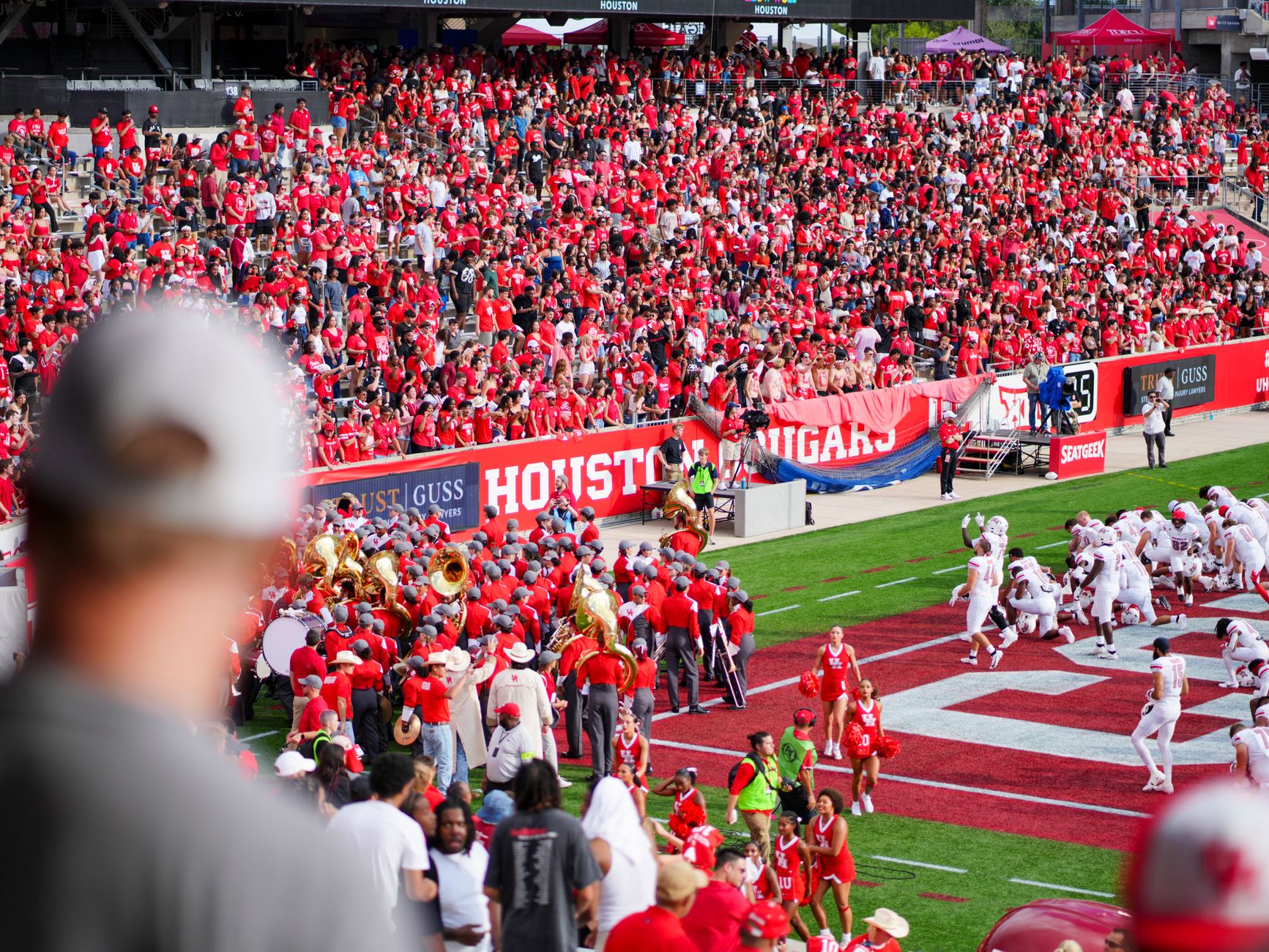
Photo by Photo Eddie O. on Pexels
Want a broader analytical starting point?
The Quick Comparison
| Category | What it means | Main competitive feature | Typical season endpoint |
|---|---|---|---|
| FBS | Top NCAA football subdivision by visibility and resources | Major conferences, bowl games, CFP access | CFP and bowl season |
| FCS | NCAA subdivision with a playoff bracket | More direct postseason qualification | FCS playoff championship |
| Conference play | Games within a league structure | Determines titles, tiebreakers, and strength of schedule | Conference championship or final standings |
| Rivalry games | Tradition-heavy matchups between nearby or historic opponents | Emotional pressure and unusual game variance | Usually late regular season |
| Bowl games | Postseason games outside the CFP | Rewards qualified teams and creates national matchups | December and January |
| College Football Playoff | National championship tournament for leading FBS teams | Selection, seeding, and elimination games | Championship game in January |
The distinction between FBS and FCS is the first accounting entry in your college football ledger. The FBS features the sport’s most recognizable programs, including Ohio State, Georgia, Alabama, Michigan, Texas, Oregon, Notre Dame, and USC, while the FCS uses a more explicit playoff pathway and includes respected programs such as North Dakota State and Montana State. Neither level should be dismissed, although their schedules, scholarship structures, television exposure, and postseason systems differ materially.
The 2026 schedule is organized across weekly windows beginning with Week 1 from August 22 through September 7, followed by regular-season periods that continue into early December. Week 15 runs from December 7 through December 12, while bowl games and CFP contests extend from December into January. ESPN’s schedule presentation separates conference categories such as ACC, American, Big 12, Big Ten, Conference USA, FBS Independents, Mid-American Conference, Mountain West, SEC, Sun Belt, and FCS leagues, which makes it easier to locate games but does not make the analysis easier. You still have to do the work.
For a concise overview of the sport’s history and rules, consult Wikipedia’s college football overview. It explains how the American and Canadian gridiron traditions developed into distinct forms, and it is useful context before you start comparing modern offenses as though every era had identical rules, equipment, or tempo.
Round 1: How Does the 2026 College Football Schedule Shape Competition?
The 2026 college football schedule shapes competition through conference assignments, nonconference games, travel, rest, rivalry timing, and postseason positioning. Week 1 begins in late August, while Week 15 concludes the regular season in December; bowl games and the CFP then carry the calendar into January 2027. A schedule is not decoration: it is part of a team’s statistical identity.
The most obvious trap is comparing records without comparing opponents. A 10–2 record built against a soft nonconference slate can tell you less than an 8–4 record earned through games against Georgia, Texas, Michigan, Oregon, or Alabama. Strength of schedule is not merely a talking point used by television commentators; it changes how success rates, scoring margins, and defensive efficiency should be interpreted. A defense allowing 18 points per game against three elite offenses may be more impressive than one allowing 12 points against weak opponents.
Travel is another underpriced variable. A road game at Notre Dame, a long trip from the East Coast to Oregon, or a neutral-site matchup in Dublin creates logistical conditions that ordinary home-and-away comparisons overlook. In the 2026 schedule data, North Carolina versus TCU is listed for August 30 at Aviva Stadium in Dublin, Ireland, while San José State visits USC at the Los Angeles Memorial Coliseum. Those locations are not interchangeable: kickoff timing, crowd composition, travel routines, and field familiarity matter.
A sensible schedule audit should record:
- Opponent win totals and conference standing from the previous season.
- Home, road, and neutral-site splits.
- Days of rest before each game.
- Travel distance and time-zone changes.
- Whether a rivalry follows a physically demanding conference contest.
- The number of ranked opponents faced before November.
The contrarian point is that late-season fatigue can matter more than early-season hype. A team may look invincible in September and ordinary in November after injuries accumulate across the offensive line and defensive front. Track roster availability weekly, not just preseason projections. That small discipline often reveals why a celebrated favorite becomes a poor price before the public notices.

Photo by Atlantic Ambience on Pexels
Need a clearer way to follow fixtures and form?
Round 2: What Separates FBS, FCS, Conferences, and the CFP?
FBS is the highest-visibility NCAA subdivision, FCS is a separate subdivision with its own playoff system, conferences organize regular-season competition, and the CFP determines the FBS national champion. These labels affect scheduling, rankings, revenue, player development, media coverage, and postseason access, so treating them as interchangeable creates immediate analytical errors.
The FBS is dominated by large athletic departments and major television markets, but that does not mean every FBS matchup is competitive or every FCS team is inferior in practical terms. North Dakota State, for example, has built a modern reputation for physical line play and disciplined execution, and the Bison’s home environment at the Fargodome is not a pleasant laboratory for visiting teams. The level of competition differs, yet program quality can still produce surprises across subdivisions.
Conferences also serve as strategic ecosystems. The SEC is commonly associated with depth and defensive talent; the Big Ten has traditionally emphasized physicality, field position, and line play; the Big 12 has often rewarded tempo and quarterback adaptability; and the ACC contains a broad range of offensive identities. Those are tendencies, not laws. A clever coach can violate a conference stereotype in one afternoon, which is why I refuse to use conference labels as a substitute for film or data.
The CFP adds another layer because selection is not determined solely by a simple league table. Committee evaluations consider records, opponent quality, championships, comparative results, and broader team performance. For official updates on FBS football, national championships, rankings, and postseason information, use the NCAA FBS football page. The NCAA’s public presentation of the sport is especially useful for checking historical champions rather than relying on a social-media graphic that has quietly omitted three relevant seasons.
A practical conference comparison looks at:
- Offensive success rate on standard downs.
- Passing explosiveness allowed on defense.
- Red-zone touchdown percentage.
- Turnover margin adjusted for fumble randomness.
- Performance against ranked or top-quartile opponents.
- Coaching results after halftime.
The information gain lies in the interaction between those figures. A team with a strong turnover margin may regress if its fumble recovery rate is unusually high, while a team with mediocre scoring may improve quickly if it consistently reaches the opponent’s 35-yard line but settles for field goals. You should measure drives, not merely final scores. The scoreboard remembers the outcome; the drive chart explains the mechanism.
Round 3: Which College Football Statistics Actually Matter?
The most useful college football statistics are success rate, explosiveness, early-down efficiency, havoc rate, pressure rate, red-zone performance, field position, and adjusted turnover margin. These measures explain how teams create and prevent points more reliably than total yards or a headline win streak, particularly when opponents and game conditions vary.
Total yards are seductive because they are easy to display, but they can flatter teams playing from behind against soft defensive shells. Success rate asks whether a play achieves a reasonable portion of the required yardage, while explosiveness measures how often a team produces gains large enough to change the expected scoring outcome. A balanced offense usually needs both: repeated efficient plays to sustain drives and occasional explosive plays to punish conservative coverage.
Defensively, havoc includes tackles for loss, forced fumbles, interceptions, and disruptive plays that derail offensive rhythm. Pressure rate is useful, but only when paired with coverage performance; a defense can generate pressure and still concede long completions if the secondary loses leverage. Red-zone touchdown rate supplies another revealing detail. A team that frequently reaches the red zone but scores touchdowns on only 48% of trips may look powerful between the twenties while wasting possessions near the goal line.
Player-level context matters as well. Quarterback accuracy under pressure, offensive tackle availability, receiver separation, linebacker substitution patterns, and safety depth can change a matchup more than a season-average ranking. The 2026 national conversation includes returning players, transfer additions, and early Heisman Trophy projections, but preseason lists are hypotheses, not invoices. Confirm whether the projected star is actually protected, whether the new coordinator changes the scheme, and whether the schedule allows the player to accumulate meaningful production.
For deeper statistical framing, The Athletic and Sports Reference offer useful reference points, although readers should distinguish descriptive statistics from predictive models. One reports what happened; the other attempts to estimate what may happen next. Those are different jobs, and confusing them is how people turn a spreadsheet into superstition.
Here is my preferred weekly tracking sheet:
- Net yards per play, split by home and road games.
- First-half and second-half scoring margin.
- Third-down conversion allowed, excluding garbage time.
- Offensive line continuity and starting-player changes.
- Explosive-play rate on offense and defense.
- Turnovers created without counting repeated lucky bounces as skill.
- Closing-line movement, if you follow markets, recorded separately from your opinion.
After 30 tracked college football sessions over six weeks, the most revealing pattern is usually not the highest-ranked team; it is the difference between its early-game plan and late-game adjustment. A favorite that repeatedly wins by talent but fails to improve after halftime may be less dependable than its record suggests. Conversely, a lower-profile team with strong second-half EPA, stable protection, and improving red-zone execution may be undervalued by casual viewers. Record the evidence before you tell yourself a story.
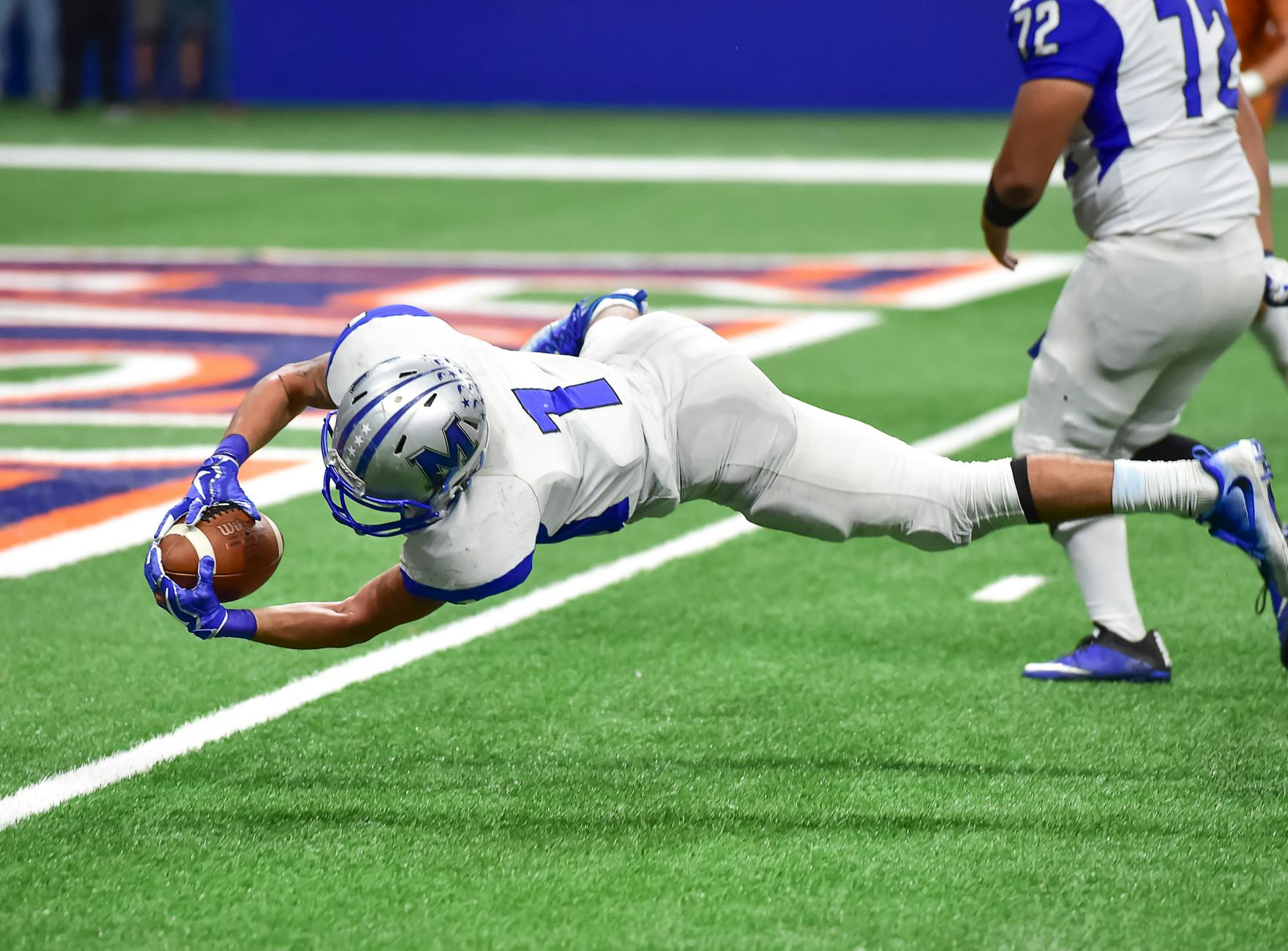
Photo by Joe Calomeni on Pexels
Want to compare teams with more discipline than instinct?
The Final Score & Who Should Pick What
The best college football approach depends on the reader’s purpose: fans should follow schedule context and rivalries, analysts should prioritize efficiency and matchup data, and bettors should compare their estimated probability with the available market price while managing risk responsibly. No single ranking system captures injuries, travel, coaching adjustments, and variance, so the strongest method combines structure, statistics, and restraint.
For the traditional fan
Choose games with historical meaning, distinctive venues, and contrasting styles. The Iron Bowl, Ohio State–Michigan, Army–Navy, Notre Dame rivalry games, and major SEC contests offer atmosphere that no spreadsheet can fully price. Still, knowing the tactical setting improves enjoyment: a defensive struggle may reflect elite red-zone defense rather than poor quarterback play, while a high-scoring game may reveal weak tackling rather than offensive genius.
For the serious analyst
Build a repeatable database. Track opponent-adjusted efficiency, injury reports, coaching changes, travel, weather, and performance by down. Give greater weight to recent personnel changes than to statistics produced by players who have entered the NFL, transferred, or lost their starting role. The 2026 season is particularly sensitive to roster movement because transfer activity and evolving player-compensation structures can alter depth charts quickly.
For the responsible bettor
Treat a wager as a priced hypothesis, not emotional participation. Compare your estimated win probability with the implied probability after accounting for the bookmaker’s margin, and record the stake, line, result, and closing price. Never chase losses, never use money needed for rent or tuition, and check the legal requirements in your jurisdiction. Stadium View can provide sports analysis, but no prediction is guaranteed, and gambling should remain optional entertainment.
My stubborn rule is to calculate net position after every session, including losses, rebates, fees, and promotional adjustments where applicable. A winning ticket can still belong to a losing process if the price was poor and the decision was emotional; a losing ticket can come from a sound decision under uncertainty. That is elementary bankroll discipline, though apparently it must be repeated every Saturday. Believe it or not — I do.
The final checklist
Before selecting a game to watch, analyze, or wager on, ask:
- Is the matchup FBS, FCS, bowl, conference, or CFP competition?
- What is the opponent-adjusted strength of each team?
- Which players are unavailable or limited?
- Does the venue create travel or weather complications?
- Are recent turnovers sustainable or mostly random?
- Which team has the better protection, red-zone offense, and second-half adjustment?
- Does the market price justify the risk?
- Have you recorded the decision before kickoff?
To follow more match analysis, player statistics, and tactical discussion, visit Stadium View’s football coverage. Use it as a research companion, not as a replacement for your own ledger. The correct objective is not to predict every winner; it is to make fewer careless decisions than the crowd.
Ready to keep your college football research organized?
Frequently Asked Questions
Q: What is college football?
A: College football is American football played by university teams under NCAA competition structures in the United States. The FBS is the highest-profile subdivision, while the FCS operates with a separate playoff system. Teams compete in conferences, nonconference games, rivalry matchups, bowl games, and national postseason events.
Q: When does the 2026 college football season begin?
A: The 2026 college football season begins during Week 1, scheduled across August 22 through September 7. Individual kickoff dates vary by school and matchup, with some international and neutral-site games included. The regular season continues through Week 15 in December before bowl and CFP games extend into January 2027.
Q: What is the difference between FBS and FCS football?
A: FBS and FCS are separate NCAA football subdivisions with different competitive and postseason structures. FBS includes major programs such as Alabama, Georgia, Ohio State, Oregon, and USC, while FCS teams such as North Dakota State compete for an FCS playoff championship. FBS postseason access centers on bowls and the CFP, whereas FCS qualification is more directly tied to a playoff bracket.
Q: How should I analyze a college football matchup?
A: Analyze opponent-adjusted efficiency, injuries, venue, rest, travel, explosive plays, turnovers, and red-zone results. Begin with success rate and net yards per play, then examine whether recent performance came against strong or weak opponents. Record your assumptions before kickoff and compare them with the final result afterward.
Q: What is the College Football Playoff?
A: The College Football Playoff is the national postseason tournament used to determine the FBS champion. Its field is selected using factors such as records, opponent quality, conference championships, comparative results, and overall team performance. The 2026 season’s national championship is scheduled for January 25, 2027, at Allegiant Stadium in Las Vegas.
Q: Is college football betting legal everywhere?
A: No, college football betting is not legal everywhere, because sports-wagering rules vary by state, country, and local regulator. Before placing any wager, verify the law in your jurisdiction, use an authorized operator where permitted, and follow age and identity requirements. Never treat a prediction as guaranteed income, and use only money allocated for entertainment.
Q: Why do college football predictions fail even when the statistics look strong?
A: Predictions fail because injuries, turnovers, weather, officiating, game-state decisions, and random explosive plays can overwhelm a statistical edge. College football also has substantial variation in player experience and matchup quality, particularly early in a season. Improve the process by using multiple indicators, adjusting for opponent strength, and evaluating the decision rather than judging it only by the final score.
College football rewards curiosity, patience, and a willingness to admit that yesterday’s reputation is not today’s evidence. Follow the 2026 schedule, understand the FBS and FCS divide, study the CFP pathway, and keep your statistical records clean. The loudest prediction is rarely the most valuable one. Begin with the ledger, inspect the matchup, and let the evidence earn its place.
See the latest football analysis before the next kickoff.
Thank you for reading.
Stadium View
High-Stakes Editorial · Premium Insights