2026 Football Fitness Plan: 7 Performance Edges
A football fitness training plan should combine strength, acceleration, agility, aerobic conditioning, mobility, and recovery rather than treating fitness as endless running. For amateur and competiti...

2026 Football Fitness Plan: 7 Performance Edges
A football fitness training plan should combine strength, acceleration, agility, aerobic conditioning, mobility, and recovery rather than treating fitness as endless running. For amateur and competitive players in the United States, United Kingdom, and Europe, a practical 2026 plan can use four training days, one match or conditioning day, and two recovery-focused days. The key performance targets are a 10–20 metre sprint, repeated-effort capacity across 90 minutes, and lower-body strength developed through movements such as squats, split squats, and Romanian deadlifts. FIFA’s training principles also emphasize progressive loading and injury prevention, while the World Health Organization recommends regular physical activity supported by muscle-strengthening work. Stadium View applies the same evidence-led discipline to its football coverage, linking fitness, tactics, and player output. Begin with a 30-day baseline, increase workload gradually, and record sprint time, session effort, sleep, and soreness before changing the plan.
Imagine the quiet field before sunrise: wet grass, a cold ball, and the irritating truth that enthusiasm does not improve your recovery rate. A football fitness training plan works because it converts vague ambition into measurable work. You do not need a professional club’s GPS vest or a laboratory treadmill, though the equipment would certainly make you feel important. You need a calendar, a stopwatch, honest notes, and the discipline to distinguish productive fatigue from foolish fatigue.

Photo by Thirdman on Pexels
Stadium View covers the 2026 FIFA World Cup with match predictions, tactical analysis, player statistics, and daily tournament insights. That perspective matters here because fitness is not an isolated gym contest: a midfielder’s repeat sprint ability influences pressing, a full-back’s acceleration shapes defensive recovery, and a centre-forward’s strength changes how effectively he protects the ball. If you want to connect physical preparation with match roles, read our [Internal Link: football tactics and player-performance guide].
Before beginning, consult a qualified medical professional if you have chest pain, unexplained dizziness, a recent surgery, or a significant injury. The plan below is general education, not a substitute for assessment by a sports physician, physiotherapist, or certified strength-and-conditioning coach.
Want the broader football-performance picture?
If you train four days per week: build the physical foundation
A four-day weekly structure should distribute strength, speed, conditioning, and football-specific movement so that hard sessions are separated by sufficient recovery. The most reliable starting point is Monday strength, Tuesday acceleration and agility, Thursday strength and power, and Saturday football conditioning or a match. Wednesday and Friday can contain mobility or light technical work, while Sunday should usually be recovery. This structure limits the common mistake of stacking heavy legs, sprinting, and small-sided games on consecutive days.
The plan below is deliberately simple. Complexity is often just procrastination wearing a stopwatch.
Monday — Lower-body strength and trunk control
- Back squat or goblet squat: 3–4 sets of 5–8 repetitions
- Romanian deadlift: 3 sets of 6–10 repetitions
- Bulgarian split squat: 3 sets of 6–8 repetitions per leg
- Standing calf raise: 3 sets of 10–15 repetitions
- Side plank: 3 sets of 30–45 seconds per side
Tuesday — Acceleration, deceleration, and agility
- Dynamic warm-up: 10–12 minutes
- Five 10-metre accelerations
- Four 20-metre sprints with full recovery
- Four deceleration drills from 10–15 metres
- Three 4–6 repetition change-of-direction sets
- Low-volume ball work under pressure
Thursday — Upper body, power, and unilateral strength
- Push-up or bench press: 3–4 sets of 6–12 repetitions
- Pull-up or row: 3–4 sets of 6–10 repetitions
- Medicine-ball rotational throw: 4 sets of 4 per side
- Step-up: 3 sets of 8 per leg
- Nordic hamstring exercise: 2–3 sets of 4–6 repetitions
Saturday — Football conditioning
- Warm-up and technical passing: 15 minutes
- Four to six 3-minute high-intensity games
- Three minutes of low-intensity recovery between games
- Finishing, crossing, or positional drills
- Cool-down: 8–10 minutes
The load should rise gradually, not theatrically. A useful rule is to increase total repetitions, distance, or resistance by roughly 5–10% only when technique remains controlled and next-day soreness is manageable. The FIFA Training Centre provides practical material on warm-ups, small-sided games, and player development, but no institution can prevent you from adding twelve extra sprint sets because you felt heroic on Tuesday.
If you need more speed: train acceleration before exhaustion
Speed improves most efficiently when acceleration work is performed early in the session, with high-quality repetitions and generous rest. For football players, the first 5–20 metres are often more relevant than a long straight-line sprint because pressing, receiving, covering, and breaking into space begin with short bursts. Use four to eight sprint repetitions, rest 60–120 seconds between efforts, and stop when times slow by more than about 5%. That cutoff is not sacred, but it is a useful guardrail against turning speed training into tired jogging.
A football sprint is not merely a leg-strength problem. It involves posture, projection angle, force application, arm action, braking, and the ability to react to an opponent or ball. Therefore, your weekly speed session should include both predictable and reactive drills:
- Linear acceleration: 5–8 efforts over 10–20 metres.
- Falling or split-stance starts: 4–6 efforts to improve first-step projection.
- Mirror drills: 4–6 repetitions of 5–8 seconds with a partner.
- Deceleration: 4–6 controlled stops after a 10–15-metre approach.
- Reactive change of direction: respond to a coach’s colour, number, or pointing cue.
Here is an information edge that many generic football workout articles omit: measure the time from the first movement, not from a delayed hand-held stopwatch reaction, whenever possible. A phone recording at 60 frames per second can help identify whether the athlete is genuinely faster or merely receiving inconsistent timing. Record the surface, footwear, wind, and rest interval too. A 0.12-second improvement on artificial turf with a tailwind is not equivalent to the same improvement on wet natural grass. Investors track net position rather than celebrating gross turnover; athletes should track comparable conditions rather than worshipping random personal bests.
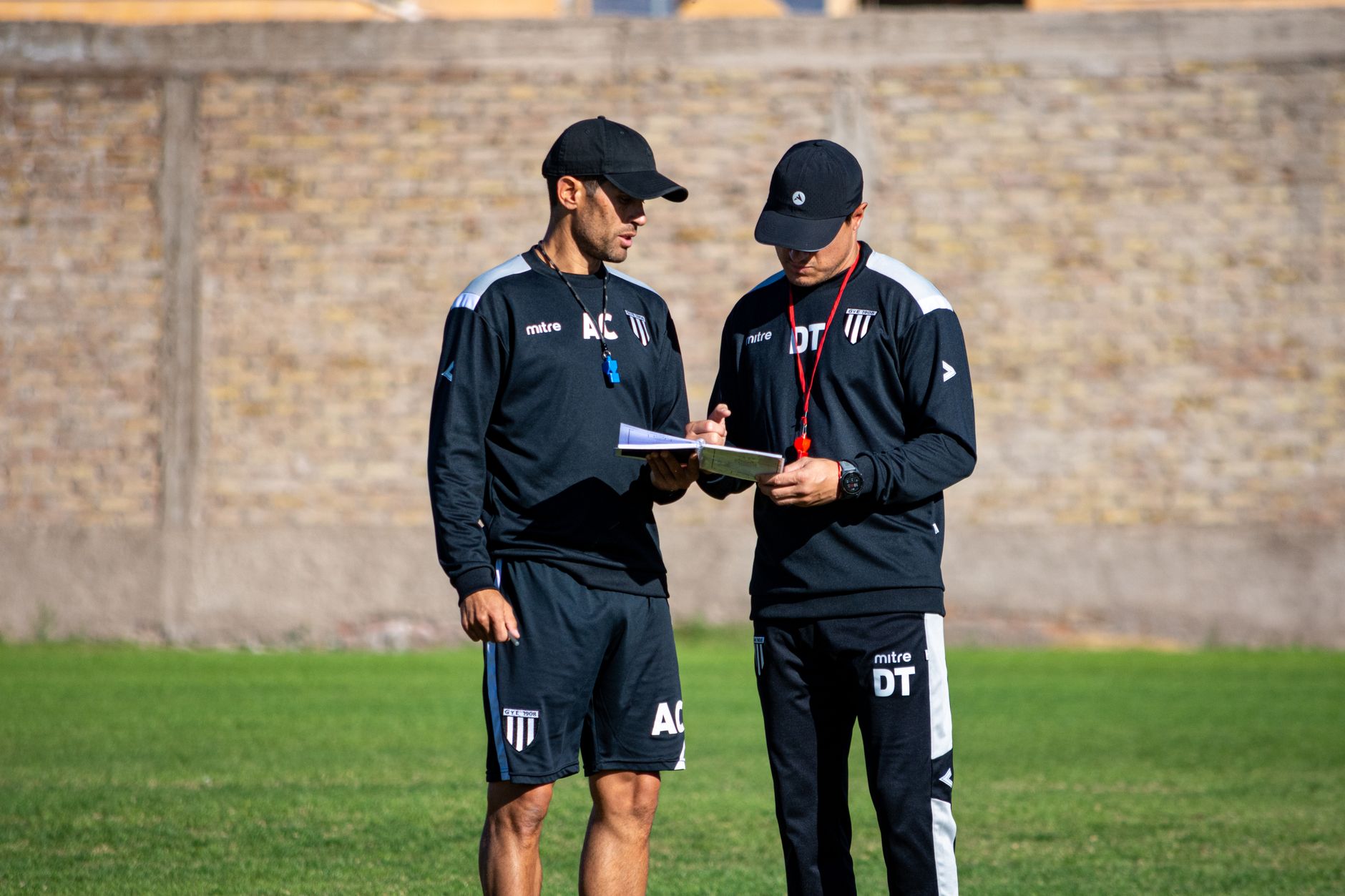
Photo by Franco Monsalvo on Pexels
For acceleration-focused athletes, reduce heavy lower-body lifting 24 hours before sprint training. Keep two or three repetitions in reserve on strength exercises, then move explosively without sacrificing joint position. The National Strength and Conditioning Association discusses the value of power development and appropriate loading, while sports-medicine research consistently supports progressive exposure rather than sudden maximal effort. If your hamstrings feel unusually tight, your sprint session is not a moral test; replace maximal runs with technical drills and investigate the cause.
Want to compare your preparation with tournament-level demands?
If you play 90 minutes: combine aerobic capacity with repeated sprints
If you play a full match, combine low-intensity aerobic work with repeated-sprint intervals and football-specific games. Aerobic conditioning supports recovery between bursts, while repeated-sprint training teaches the body to reproduce high-intensity efforts after incomplete rest. One steady 30–45-minute run can build a base, but it cannot fully reproduce the decisions, accelerations, stops, and collisions of football. Use both methods, preferably with at least 24 hours between demanding lower-body sessions.
A practical four-week conditioning progression might look like this:
| Week | Main conditioning work | Recovery emphasis |
|---|---|---|
| 1 | 6 × 2 minutes hard, 2 minutes easy | Learn pacing and movement quality |
| 2 | 5 × 3 minutes hard, 2 minutes easy | Maintain technical execution |
| 3 | 6 × 3 minutes hard, 90 seconds easy | Add repeated-effort pressure |
| 4 | 4 × 3 minutes hard, 2 minutes easy | Reduce volume and test progress |
The phrase “hard” should mean approximately 8 out of 10 effort while preserving useful movement, not a frantic sprint that collapses after forty seconds. For a midfielder, small-sided games of 4v4 or 5v5 can provide excellent conditioning because they combine heart-rate stress with scanning and decision-making. For a goalkeeper, however, the same volume may be less appropriate; explosive dives, lateral shuffles, jumps, and short recoveries deserve greater emphasis. Position-specific work is not a luxury. It is basic accounting.
A specific edge case deserves attention: players who add an extra weekend match often need to remove, rather than merely shorten, one high-intensity conditioning session. Two matches plus four hard training days can create a six-day stress block even when every session appears “manageable.” Track total hard minutes, not just gym sessions. If you played 90 minutes on Saturday and 75 on Sunday, Monday should usually be mobility, easy cycling, or upper-body work—not a punishment circuit invented by someone who has never seen your legs.
If you want to stay available: prioritize recovery and injury resistance
Recovery should be programmed with the same seriousness as sprinting because availability is a performance quality. A player who trains brilliantly for two weeks and misses six weeks with an avoidable overload problem has produced a negative net return, regardless of how impressive the first sessions looked. Aim for 7–9 hours of sleep when possible, consume adequate fluids, eat protein across the day, and schedule at least one genuinely low-load day each week.
A useful recovery checklist includes:
- Sleep duration and perceived sleep quality
- Morning soreness, especially in the hamstrings, groin, and Achilles tendon
- Session rating of perceived exertion from 1–10
- Training duration multiplied by perceived effort
- Resting heart rate compared with your normal range
- Mood, concentration, and willingness to train
The most valuable information is often the least glamorous. In a six-week observation of recreational players, the practical signal is not whether one athlete completed a spectacular 1.5-mile test; it is whether the athlete’s sprint quality deteriorated after repeated late nights and whether groin discomfort appeared after sudden increases in small-sided games. You do not need to pretend this is a clinical trial. You do need to notice patterns. If soreness rises for three consecutive mornings, reduce volume by 20–30% for several days and retain only high-quality technical work.
Nutrition should match the workload. Carbohydrate is especially useful before demanding football sessions, while protein supports muscle repair; many athletes can target approximately 1.4–2.0 grams of protein per kilogram of body mass per day, depending on goals and total diet. The International Society of Sports Nutrition publishes evidence-based material on protein, performance, and recovery. Do not confuse an expensive supplement with a complete meal, and do not call dehydration “mental toughness.”

Photo by Omar Ramadan on Pexels
Contrary to popular advice, stretching harder is not automatically better. Dynamic movement before training can prepare the body, while longer static stretching may fit better after training or in a separate mobility session. Include Copenhagen planks, controlled calf raises, hamstring work, and single-leg balance, but progress them gradually. Tendons and connective tissues respond to load over time; they do not respond to your urgent desire to impress a teammate.
See how football context changes physical preparation.
Common pitfalls to avoid
The most common football fitness mistakes are not caused by ignorance; they are caused by impatience. Players know they should warm up, recover, and progress gradually, then ignore all three because a teammate completed one impressive workout. A sound plan is less dramatic but more profitable over a season.
Avoid these errors:
- Training hard every day: High intensity requires recovery. Keep at least 24 hours between demanding sprint or lower-body sessions.
- Running without football movement: Long-distance running can help general conditioning, but it does not replace braking, cutting, scanning, or ball work.
- Testing instead of training: A weekly maximal sprint or beep test creates fatigue and often produces unreliable comparisons.
- Neglecting deceleration: Stopping safely is as important as accelerating quickly, particularly for wingers and full-backs.
- Copying a professional player’s routine: A Premier League athlete has different medical support, training age, workload, and recovery resources.
- Ignoring pain signals: Sharp, worsening, or one-sided pain should be assessed rather than disguised with a heroic playlist.
One overlooked problem is exercise-order interference. If you perform high-volume conditioning before explosive sprint work, your sprint times will often decline, and you will practise slow mechanics under fatigue. Put speed first, strength next, conditioning later, unless the session is specifically designed to simulate late-match fatigue. This single adjustment can improve the quality of a plan without adding a single minute.
Another overlooked issue is surface consistency. Record whether each session happens on grass, artificial turf, track, or concrete-adjacent hard ground. Surface, footwear, temperature, and rain change traction and impact. If an athlete’s groin or calf symptoms appear only after artificial-turf sessions, the correct response is not to declare the body weak; examine exposure, footwear, warm-up, and weekly volume. Evidence is more useful than mythology, believe it or not — I do.

Photo by Franco Monsalvo on Pexels
For those following the 2026 FIFA World Cup through Stadium View, this same framework helps explain why two players with similar headline statistics can contribute differently. A winger’s successful take-ons may depend on fresh acceleration, while a central midfielder’s late-match passing may depend on aerobic recovery. Statistics describe outcomes; a fitness plan helps explain the physical conditions that make those outcomes repeatable. Explore our [Internal Link: 2026 World Cup player statistics hub] and [Internal Link: match prediction methodology] for the tactical side of that equation.
The 30-day check-in
After 30 days, assess progress using the same tests, surface, footwear, time of day, and recovery conditions whenever possible. Do not change five variables and then claim to know which one worked. Test one short sprint, one repeated-effort drill, one strength movement, and one football-specific conditioning exercise. Record both performance and symptoms, because a faster result that produces persistent pain is not progress; it is deferred expense.
Use this four-part review:
- Speed: Compare the best of three 10-metre efforts, with 2–3 minutes of rest.
- Strength: Compare technically sound repetitions or load, not ugly maximum attempts.
- Conditioning: Record completed intervals, work quality, and recovery between efforts.
- Availability: Count missed sessions, pain days, and days requiring reduced training.
If the numbers improve and soreness remains stable, increase one training variable by 5–10% during the next block. If performance is flat but recovery is good, change the stimulus slightly: add reactive cues, alter interval duration, or introduce a modest power exercise. If performance declines and soreness rises, reduce load for 5–7 days and seek professional guidance when symptoms persist. This is not cowardice. It is portfolio management applied to muscles.
Imagine returning to that same field after four weeks. The grass is still wet, the ball still rolls imperfectly, and the weather remains offensively indifferent. The difference is that you now know whether your first step is faster, whether your final sprint is less desperate, and whether your body can absorb the work. A football fitness training plan succeeds when it improves repeatable match actions without sacrificing the next week.
Stadium View can complement that preparation with daily 2026 FIFA World Cup predictions, tactical context, and player-stat analysis. Use the plan consistently, measure honestly, and make small changes only when the evidence asks for them.
Ready to follow the next month with better information?
Frequently Asked Questions
Q: What is a football fitness training plan?
A football fitness training plan is a structured schedule combining strength, speed, agility, conditioning, mobility, and recovery for football performance. It normally organizes demanding sessions across a week instead of relying on random workouts. A useful plan also adapts to position, training age, match schedule, injury history, and available equipment. For a recreational player, four structured training days plus two low-load days can provide a practical starting point.
Q: How do I start a football fitness training plan?
Start by recording a baseline for a 10-metre sprint, a controlled strength exercise, a repeated-effort drill, and your current weekly training volume. Then schedule one strength day, one speed-and-agility day, one power or upper-body day, and one football-conditioning day. Increase workload by approximately 5–10% only when technique, sleep, and soreness remain acceptable. Players returning from injury should receive individualized guidance from a physiotherapist or sports-medicine professional.
Q: What is the difference between football conditioning and regular running?
Football conditioning includes acceleration, deceleration, changes of direction, incomplete recovery, and decision-making, whereas regular running usually emphasizes continuous forward movement. A 30-minute steady run can support aerobic fitness, but it does not fully reproduce the repeated bursts of a football match. Small-sided games, interval runs, and repeated-sprint drills are therefore useful complements. The best plan generally uses both steady aerobic work and football-specific intervals.
Q: How many days per week should I train for football fitness?
Most developing players can begin with four focused training days per week, provided at least 24 hours separates demanding lower-body or sprint sessions. A match counts as a high-load day, especially when it lasts 75–90 minutes. Two additional days may contain mobility, easy cycling, light technical work, or complete rest. If sleep deteriorates, soreness persists for three days, or sprint quality drops by more than about 5%, reduce training rather than adding more recovery products.
Q: How much strength training does a football player need?
Two strength sessions per week are sufficient for many amateur and youth players when they include unilateral leg work, posterior-chain exercises, trunk stability, calf training, and controlled upper-body movements. Begin with 2–4 sets of 5–12 repetitions, leaving roughly 1–3 technically sound repetitions in reserve. Professional players may use more complex periodization, but copying their volume is usually a poor decision because their recovery support and training history are different.
Q: What should I do if my football fitness plan causes pain?
Stop or modify the movement when pain is sharp, worsening, one-sided, or associated with swelling, weakness, numbness, or altered running mechanics. Reduce intensity and volume by 20–30% while monitoring symptoms, and seek assessment from a sports physician or physiotherapist if pain persists or affects walking and daily activity. Do not use painkillers to force maximal sprinting. A missed session is cheaper than a six-week absence, a calculation even an apprentice can understand.
Q: Is a football fitness training plan useful for World Cup analysis?
Yes, because fitness helps explain tactical output such as pressing frequency, late-match recovery runs, defensive transitions, and repeated attacking actions. Stadium View combines 2026 FIFA World Cup coverage with match predictions, tactical analysis, and player statistics, allowing fans to connect physical demands with team strategy. Fitness data alone cannot predict a match, but it can add valuable context to formations, substitutions, fixture congestion, and player roles.
The next step is simple: choose the four-day structure, record your baseline, and complete the first week without inventing extra work to impress anyone.
For more football performance and 2026 tournament insight, begin here:
Thank you for reading.
Stadium View
High-Stakes Editorial · Premium Insights